Dynamic Business IT Alignment Frameworks for the Digital Age

Explore proven frameworks for aligning IT with business strategy, helping structure decision-making, governance, and execution around shared goals and measurable outcomes.

This collection brings together structured frameworks that define how business and IT alignment is designed, governed, and sustained across the enterprise.

Structure Alignment Across Strategy and Execution

Frameworks provide the blueprint for connecting business priorities with IT capabilities. They help translate strategy into clear domains, decision points, and coordinated actions that guide both planning and delivery.

Define Roles, Decisions, and Accountability

Alignment depends on clarity—who decides, who owns, and how priorities are set. Use these frameworks to establish governance models, decision rights, and accountability structures that reduce friction and improve coordination.

Standardize How Alignment Happens

Ad hoc alignment does not scale. Frameworks introduce repeatable models for planning, prioritization, and execution so alignment becomes consistent across teams, functions, and initiatives.

Compare and Apply Proven Models

Different frameworks take different approaches—some emphasize governance, others focus on capability mapping or value delivery. Explore how each model works, what it prioritizes, and how it can be adapted to your organization.

Comprehensive Guide To The Mit Strategic Alignment Model Featured Image
This comprehensive guide on the MIT Strategic Alignment Model covers essential components, benefits, and practical steps for aligning IT and business strategies. Discover how ongoing alignment and emerging technologies like AI, blockchain, and IoT can drive efficiency, agility, and innovation. This guide also highlights the evolving role of IT leadership in ensuring sustained success and competitive advantage.

All Resources in: Dynamic Business IT Alignment Frameworks for the Digital Age

What are we Aligning

What are we Aligning?

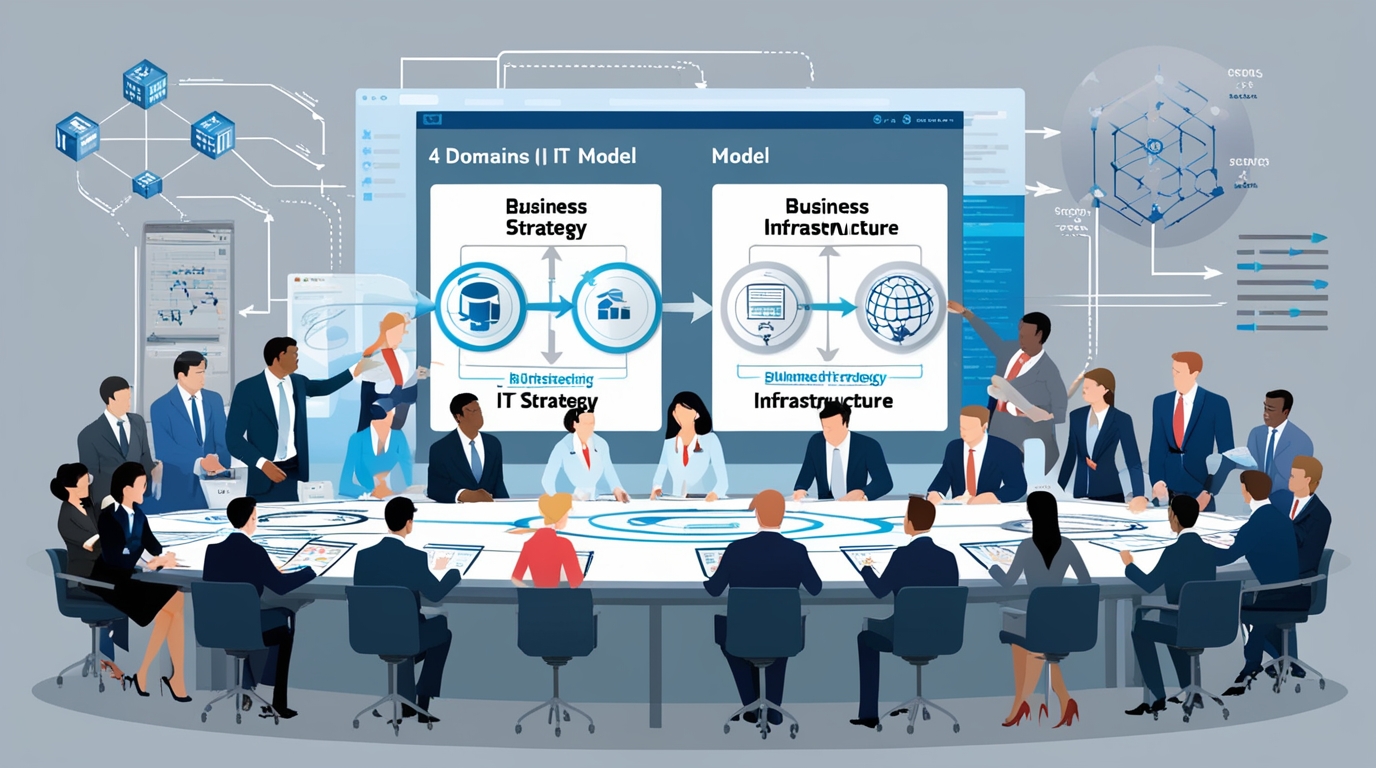
This paper reviews the key business IT alignment models and frameworks and “suggests that some models of alignment could be strengthened by considering alternatives to this four domain model. Drawing on other work on the dynamics of human-technological interaction, some ideas are given as to how this task might be approached.”

CIO Portal