CIO's Complete AI Resource Library 2026

The ultimate collection of critical resources to architect, deploy, and govern enterprise-grade Artificial Intelligence. Transition from generative pilots to autonomous production with strategic frameworks for model selection, agentic orchestration, and lifecycle oversight. Access the definitive suite of AI implementation playbooks, ethics guardrails, and execution tools (PDF, PPT, XLS, DOC) needed to ensure your intelligent systems remain secure, compliant, and strictly aligned with business value.

These resources on Artificial Intelligence (AI) focuses on developing and applying intelligent computer systems capable of understanding, learning, reasoning, and problem-solving. They provide CIOs and other IT executives with expert-curated articles, documents, and resources on AI and its integration in business and organizations across industries and applications.

Key topics within the Artificial Intelligence resource library include:

  1. AI Fundamentals: Explore the foundations of AI, including machine learning, deep learning, neural networks, natural language processing, and computer vision. Understand the underlying algorithms, techniques, and concepts that drive AI development.
  2. AI Use Cases: Discover real-world applications and case studies of AI across various industries, such as healthcare, finance, retail, manufacturing, and transportation. Learn how organizations leverage AI to automate processes, enhance decision-making, and improve customer experiences.
  3. AI Best Practices: Find guidance on implementing AI solutions within your organization, including strategies for data management, algorithm selection, performance evaluation, and ethical considerations.
  4. AI Frameworks and Tools: Learn about popular AI frameworks, libraries, and tools to help you develop, deploy, and manage AI solutions, such as TensorFlow, PyTorch, and scikit-learn.
  5. AI Infrastructure: Understand the requirements for AI infrastructure, including hardware, software, and networking components needed to support AI workloads and applications.
  6. AI Governance: Explore the principles and practices of AI governance, including ethical considerations, data privacy, and regulatory compliance.
  7. AI Skills and Talent: Identify the skills and expertise needed to build and manage an AI team, as well as strategies for recruiting, training, and retaining AI talent.
  8. AI and Business Strategy: Examine the strategic implications of AI for organizations, including its impact on business models, competitive advantage, and innovation.
  9. AI Security: Learn about the potential security risks and challenges associated with AI and strategies and best practices for mitigating these risks.
  10. AI and Emerging Technologies: Stay informed about the latest advancements and trends in AI research and development, as well as its convergence with other emerging technologies, such as the Internet of Things (IoT), edge computing, and quantum computing.

Future-proof your enterprise with the AI Resource Library. Designed for CIOs and Chief AI Officers, this collection provides the practical tools to transition from experimental pilots to Agentic AI production in 2026.

Access a definitive toolkit of AI policies, ethics frameworks, and implementation templates (PDF, PPT, DOC, XLS). Whether you are establishing an AI Command Center or automating complex workflows, these resources ensure your AI systems remain secure, compliant, and aligned with business value.

The Foundations of Enterprise AI & Agentic Oversight

To scale AI responsibly, leadership must move beyond “chatbots” to autonomous agents. While this library provides the templates for deployment, mastering the underlying logic of AI accountability is the prerequisite for enterprise trust.

Our 5,000-Word Comprehensive article on artificial intelligence covers LLM fundamentals, agentic workflows, and the 2026 AI regulatory landscape.

Visit the CIO Wiki: AI Reference for technical definitions of RAG, Fine-tuning, and Agentic Orchestration.

Section Description Deliverable Focus
AI Governance Playbooks Step-by-step guides for establishing AI guardrails and ‘Governance-as-Code’. Strategic Playbooks
AI Policy Toolkits Downloadable Acceptable Use Policies (AUP) and AI Risk Checklists. DOC, XLS, PDF
AI Training & Workshops Executive AI literacy programs and prompt engineering certifications. Courses / Events
Model Inventory & Audit Templates for shadow AI discovery and model performance tracking. XLS Tracking Sheets

Agentic AI & Autonomous System Governance

As AI agents move from “advisors” to “actors,” traditional oversight fails. Access our specialized resources for Agentic Orchestration, including kill-switch protocols, permission sets, and multi-agent system (MAS) monitoring templates.

Benefits Of Ai Why It Matters For Organizations
This article explores the benefits of AI by examining how artificial intelligence strengthens operational efficiency, decision intelligence, customer experience, workforce productivity, and innovation across organizations. It explains why AI matters strategically, how intelligent systems improve organizational responsiveness and scalability, and why some enterprises realize greater value from AI than others. By framing AI as an organizational capability rather than just a technology tool, this guide provides a practical understanding of how AI is reshaping enterprise performance and competitive advantage.
Examples Of Ai: How Ai Is Used Today
This article explores examples of AI by showing how artificial intelligence is used across everyday experiences, business operations, and industry applications. It breaks down how intelligent systems recognize patterns, predict outcomes, recommend actions, and generate content—making AI easier to understand through real-world use. By connecting practical examples with a clear mental model, this guide helps readers see where AI is already shaping decisions, workflows, and experiences.
Types Of Ai Explained: Narrow, General, And Superintelligence
This article explains the types of AI—Narrow AI, Artificial General Intelligence, and Superintelligence—in simple, practical terms. It separates what exists today from what is still theoretical, giving readers a clear mental model for understanding AI capabilities, limitations, and future possibilities.
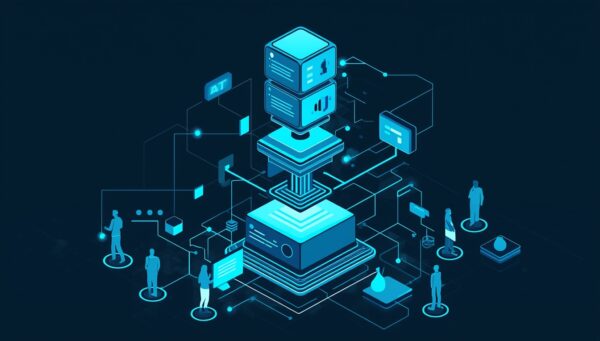
Visual Representation Of An Artificial Intelligence (Ai) Stack
This AI stack guide explains how artificial intelligence works as a system—not just a model—by breaking down its core layers, architecture, and governance requirements. It shows how data, models, orchestration, and control mechanisms come together to create reliable enterprise capabilities. CIOs will learn how to design, evaluate, and scale AI systems that deliver consistent value while managing risk, cost, and performance.
Ai Risks In The Enterprise - Why Ai Is Not Intelligence — And How To Govern Decision Integrity - Featured Image
AI is not intelligence—it generates plausible outputs, not verified answers. As these outputs enter enterprise workflows, they introduce a new form of AI risk in decision making. Decisions may appear well-supported while being built on unvalidated information. This article explains how AI creates risk in enterprise environments, why traditional governance does not manage it effectively, and how organizations can govern AI risk, validate AI outputs for decisions, and ensure AI reliability at scale. It introduces a practical governance model that helps CIOs protect decision integrity while using AI safely across the organization.
What Artificial Intelligence Really Is: Concepts, Capabilities, And Misconceptions - Featured Image
This artificial intelligence guide provides a clear and structured explanation of what AI really is, separating perception from reality. It explores core concepts, capabilities, and limitations while addressing common misconceptions that distort decision-making. By grounding AI in how it actually works, this guide helps leaders build accurate mental models and govern its use with greater confidence.
Digital Transformation And Ai: Convergence, Collision, And The New Strategic Divide - Featured Image
Digital transformation laid the foundations for modern enterprises, but AI is reshaping what those foundations must support. Intelligence thrives when systems are coherent and collapses when architectures remain fragmented. Some organizations experience convergence—where AI elevates the value of past transformation investments—while others face collision as intelligence exposes gaps in data, workflows, governance, and decision-making. This article examines the new strategic divide emerging between enterprises prepared for AI-driven operating models and those strained by the speed and precision intelligence demands.
Step-By-Step Guide To Implement Artificial Intelligence - Featured Image
Unlock the full potential of Artificial Intelligence in your organization. Dive into this meticulously crafted guide, designed for IT professionals, that breaks down AI adoption into actionable steps, ensuring strategic alignment and successful implementation.

All Resources in: CIO's Complete AI Resource Library 2026

Organizing for the AI Era - featured image

Organizing for the AI Era: Enterprise AI Organizational Design Framework

This strategic framework examines how enterprises must evolve authority models, governance integration, operating workflows, and performance measurement to compete in an AI-driven environment. It evaluates centralized, federated, and hybrid models, defines clear ownership architecture, and introduces structured tools such as the AI Operating Model Canvas and AI performance dashboard. CIOs can use this resource to transform AI from isolated experimentation into scalable organizational capability.

AI Operating Model Overlay Playbook

AI Operating Model Overlay Playbook

This AI operating model playbook helps you move beyond pilots by adding AI-specific decision points, risk tiering, standard artifacts, and run practices into your current IT operating system. It’s built as an overlay across strategy, portfolio, architecture, delivery, operations, risk, data, vendor management, and value tracking—so delivery stays fast and outcomes stay defensible.

Comprehensive AI Management Framework - featured image

Comprehensive AI Management Framework Landscape

The Comprehensive AI Management Framework Landscape maps the full landscape of approaches used to govern, organize, and sustain intelligent systems at scale. It helps leaders and practitioners separate overlapping concerns—such as accountability, value prioritization, operating ownership, risk, and maturity—so decisions are supported by the right structures instead of competing models. Designed for organizations moving beyond experimentation, this resource supports clearer governance, reduced friction, and more defensible outcomes as use expands. Excellent Read (60 pgs)

Board and Artificial Intelligence: Governing Risk and Accountability - featured image

Board and Artificial Intelligence: Governing Risk and Accountability

Bridging the gap between AI adoption and fiduciary responsibility, this analysis provides Boards and CIOs with a defensible governance framework. Grounded in NIST AI RMF and ISO 42001 standards, the guide moves beyond ethics to the mechanics of oversight—defining clear accountability, risk-tiered decision rights, and reporting cadences. It is designed for leaders who need to transition from experimenting with AI to governing its operational reality without stalling innovation. Excellent Read! (75+ pgs)

The History, Evolution, and Future of Enterprise Architecture - featured image

The History, Evolution, and Future of Artificial Intelligence

Artificial Intelligence did not arrive overnight — and neither did the leadership challenges it creates. This analysis uses AI’s long evolution to explain why today’s acceleration feels different, where risk quietly accumulates, and how history helps leaders pace decisions before urgency takes over. Excellent Read! (80+ pages)

Artificial Intelligence 101: A Primer - featured image

Artificial Intelligence Primer

This Artificial Intelligence primer provides a clear, neutral introduction to artificial intelligence—what it is, what it is not, and why shared understanding matters before action. It helps organizations reduce confusion, reset expectations, and prepare for responsible use without jumping prematurely into tools or controls. Designed for leaders who need alignment before execution. Excellent Read! (75+ pgs)

AI Implementation Guide for CIOs Turning AI Initiatives into Measurable Business Results

AI Implementation Guide for CIOs: Turning AI Initiatives into Measurable Business Results

This guide helps CIOs move AI from experimentation to execution by focusing on decisions, governance, delivery discipline, and value measurement. It offers a structured way to assess readiness, prioritize initiatives, implement responsibly, and prove impact over time. Designed for leaders who need results, not hype, it supports consistent AI delivery across industries and organizational contexts.

AI Strategy Plan Example A Blueprint for Governance, Architecture, and Scalable AI Adoption

AI Strategy Plan Example: A Blueprint for Governance, Architecture, and Scalable AI Adoption

This AI strategy plan example offers a comprehensive, real-world model for governing and scaling AI adoption responsibly. It demonstrates how to connect vision, data, ethics, and infrastructure into a coherent, actionable framework — turning ambition into structured, measurable delivery. CIOs can use it to benchmark governance models, align teams, and design enterprise AI blueprints that balance innovation with trust and control.

Loading...