Enterprise Architecture (EA) Knowledge Archive – Page 62

Enterprise Architecture (EA) knowledge refers to the understanding of the organization’s IT infrastructure, applications, and processes in the context of the overall business strategy. Effective EA knowledge can help organizations optimize their IT investments, improve IT agility, and achieve desired business outcomes.

EA knowledge may include:

  1. Understanding the organization’s business goals: Organizations should understand their business goals to ensure that their IT infrastructure and applications are aligned with overall business strategy.
  2. Assessing IT infrastructure: Organizations should assess their IT infrastructure, including hardware, software, and network infrastructure, to identify potential areas for optimization.
  3. Evaluating application portfolios: Organizations should evaluate their application portfolios to ensure that they are aligned with overall business strategy and are delivering the expected value.
  4. Optimizing IT processes: Organizations should optimize their IT processes to improve IT agility and efficiency.
  5. Establishing governance frameworks: Organizations should establish governance frameworks to ensure that IT investments are aligned with overall business strategy and are delivering the expected value.

Effective EA knowledge requires a deep understanding of the organization’s business goals, as well as the IT infrastructure and applications that support these goals. IT executives should ensure that their EA knowledge is well-documented and communicated to relevant stakeholders across the organization.

The Enterprise Architecture (EA) Knowledge category within the CIO Reference Library provides CIOs and other IT executives with a comprehensive set of resources that illustrate effective EA knowledge practices. This category includes a range of resources, such as articles, whitepapers, and case studies, that offer insights into different aspects of EA knowledge, such as understanding business goals, assessing IT infrastructure, evaluating application portfolios, optimizing IT processes, and establishing governance frameworks. By leveraging these resources, CIOs and IT executives can gain a deeper understanding of effective EA knowledge practices and optimize their IT investments to achieve desired business outcomes.

IT Organization Design to Support Service Oriented Architecture (SOA) - featured image

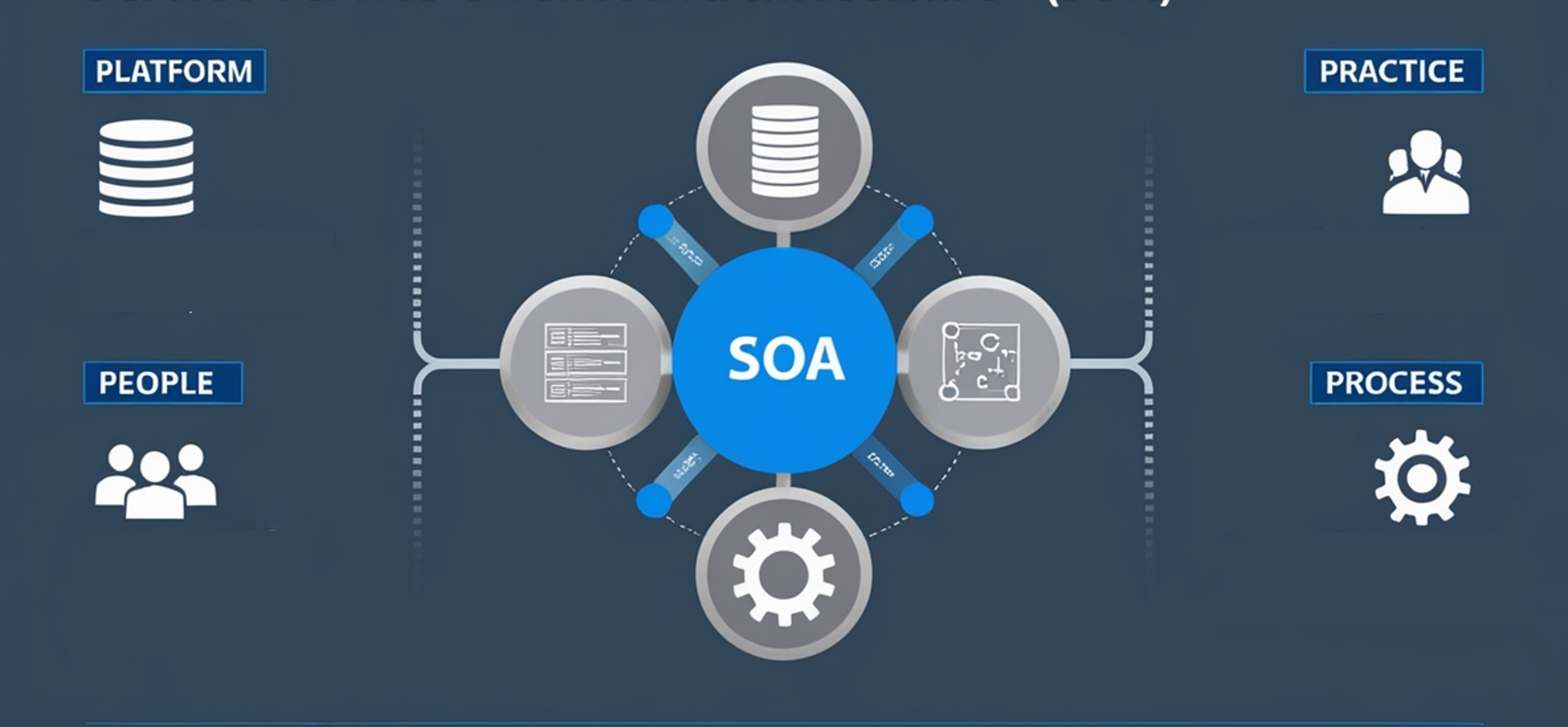
IT Organization Design to Support Service Oriented Architecture (SOA)

Explore our comprehensive guide on restructuring your IT organization for SOA implementation. Learning about organizational changes, fostering a service-oriented culture, and process revision is crucial for SOA success. Transform your IT organization, boost agility, and enhance service delivery.


SOA Governance: The Good The Bad and The Ugly! - featured image

SOA Governance: The Good The Bad and The Ugly!

Uncover the key to efficient SOA Governance with this guide to the 10 best practices. Learn to streamline your operations and increase your IT infrastructure’s flexibility and scalability through effective service-oriented architecture governance.

A Guide to IT Management Methodology

Outcome Management is a methodology for planning, managing, and realizing the desired outcomes from initiatives. Get our free guide to learn more.

Technical Architecture Guide

 Technical Architecture Guide establishes the evolving technical blueprint and accompanying guidelines to manage the integration and interoperability of the old with the new across the organization.

IT Roadmap Migration Planning Guide

This IT Migration planning guide helps create an IT roadmap – define and manage IT projects in an integrated plan that coordinates the evolution of the IT assets according to the IT Strategic Plan and Technical Architecture. Technical Evolution Guide defines the key activities, artifacts, and roles that are necessary

Technical Operations Guide

IT operations guide: Use the technology to serve the organization’s mission, keep it operating efficiently, and continuously collect and analyze data to identify opportunities for improvement.

CIO Portal